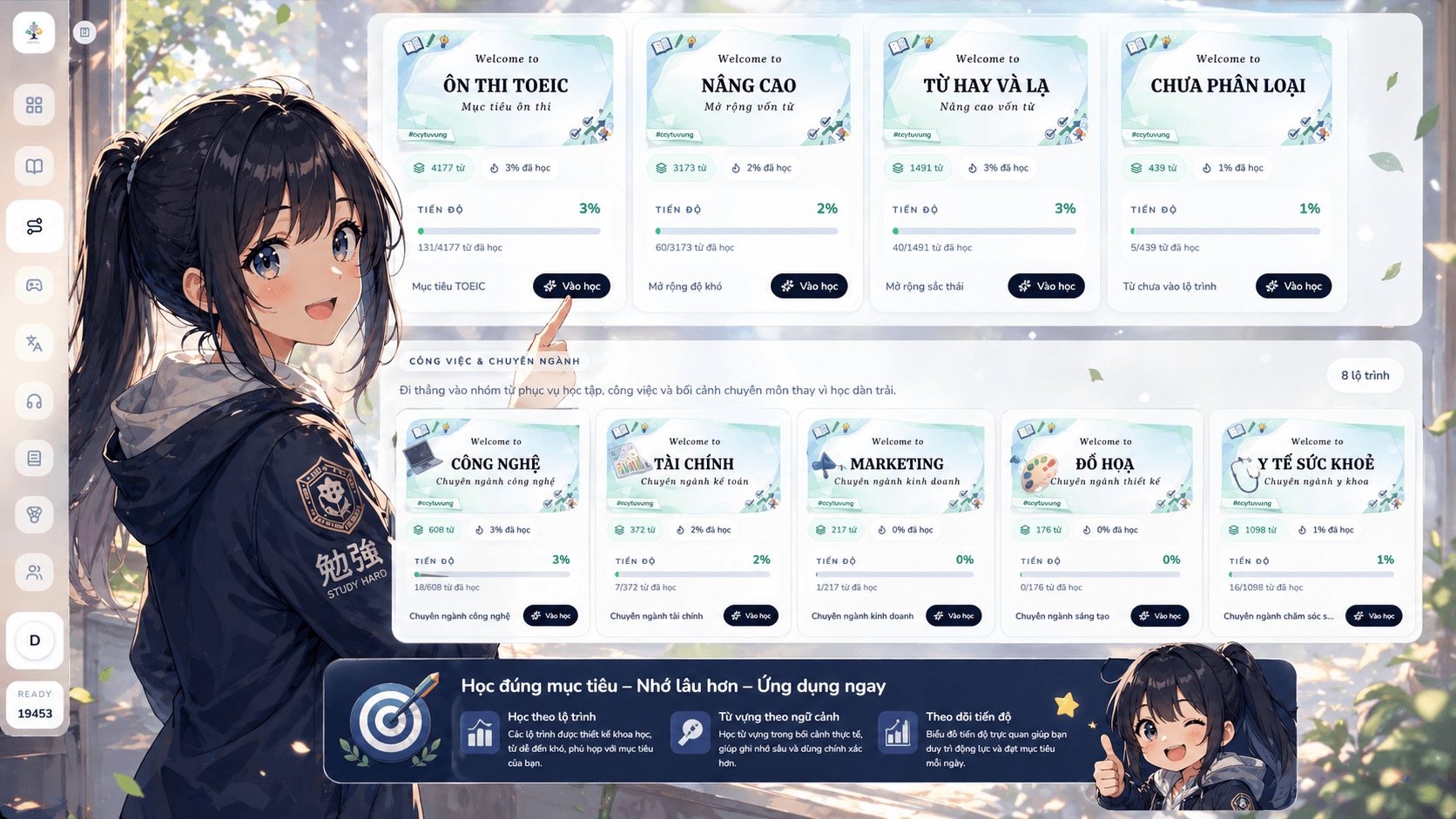
Lộ trình theo level
Chọn đúng điểm bắt đầu theo A1-C2, THPT, IELTS, TOEIC hoặc mục tiêu cá nhân.

Học đúng, nhớ lâu
Cày Từ Vựng
Cày Từ Vựng gom SRS, quiz, typing, nghe viết, luyện nghe theo clip, reading có tra nghĩa và writing ngắn vào cùng một luồng học.
Chọn deck theo THPT, IELTS, TOEIC, CEFR hoặc chuyên ngành rồi vào học ngay, không phải ghép nhiều công cụ rời rạc.
Product tour
Nhìn nhanh các màn hình cốt lõi trước khi đăng nhập: lộ trình, kho từ, flashcard, quiz, listening, reading và writing đều nằm trong cùng một luồng học.
Chọn đúng điểm bắt đầu theo A1-C2, THPT, IELTS, TOEIC hoặc mục tiêu cá nhân.

Tra nhanh, lọc theo tag và mở từ đúng nhóm để học sâu hơn.
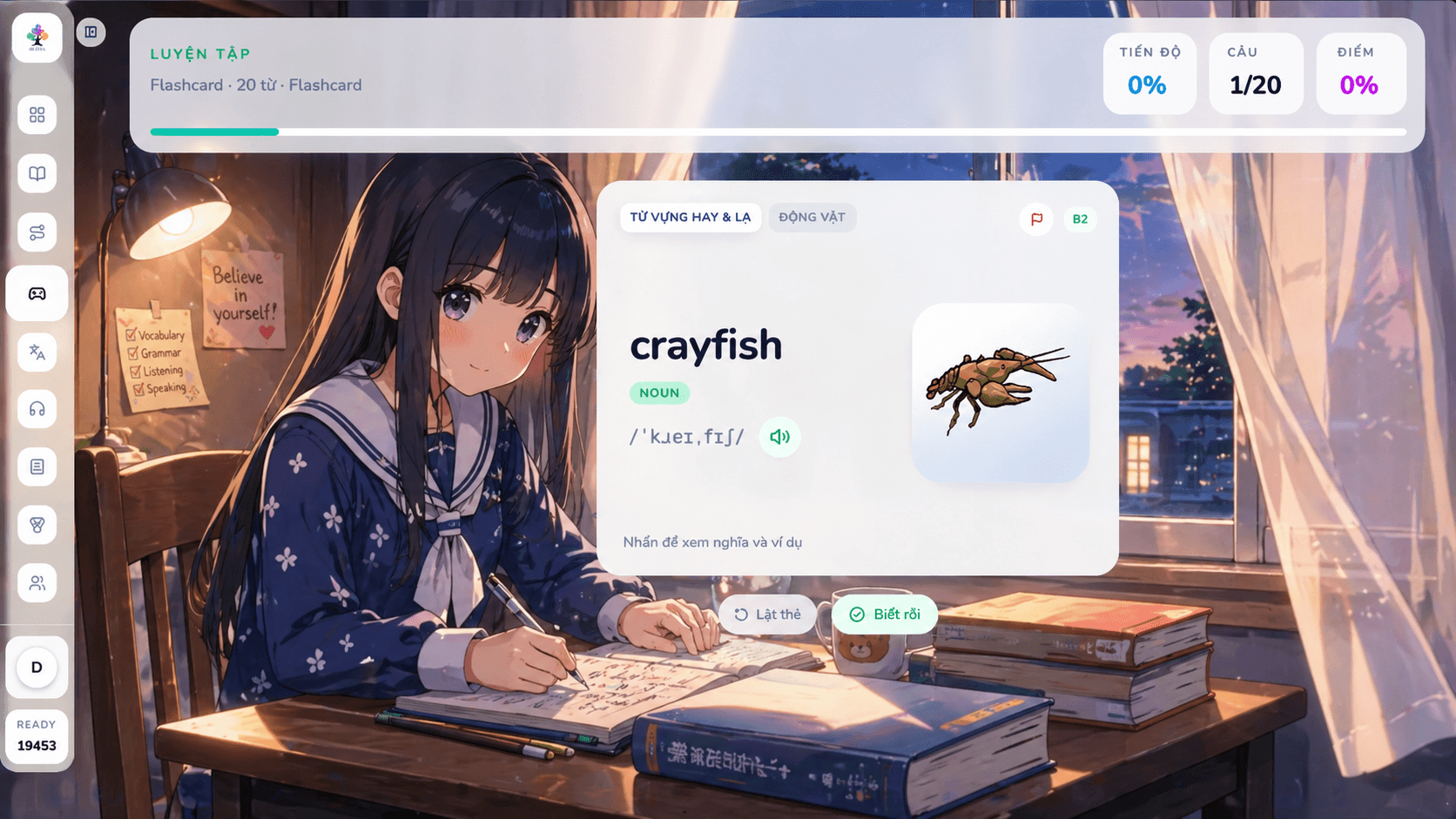
Ôn từ theo nhịp lặp lại, giữ từ mới và từ đến hạn trong cùng một vòng học.
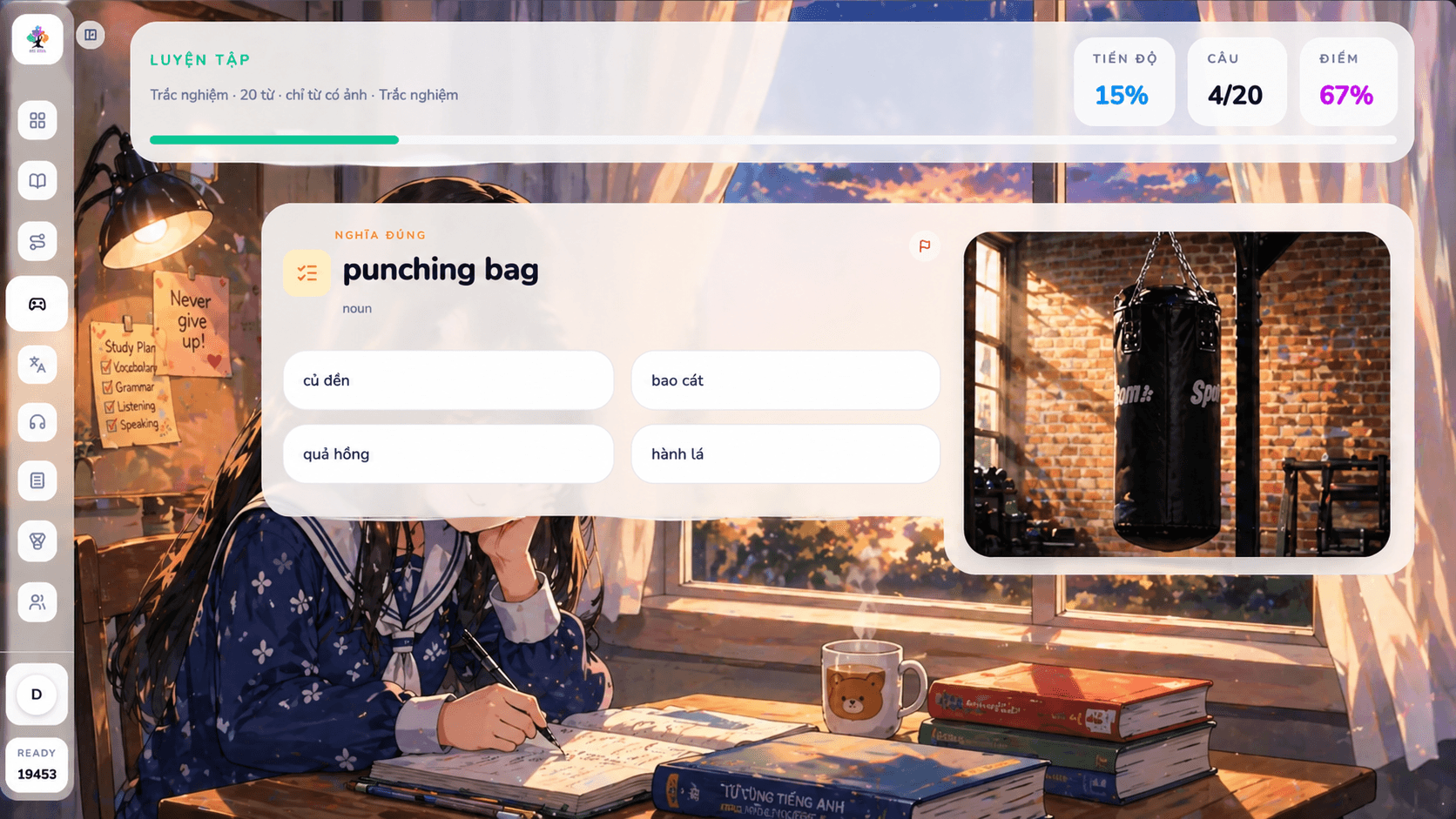
Chuyển từ nhận biết sang phản xạ chọn nghĩa, chọn từ và kiểm tra lại.
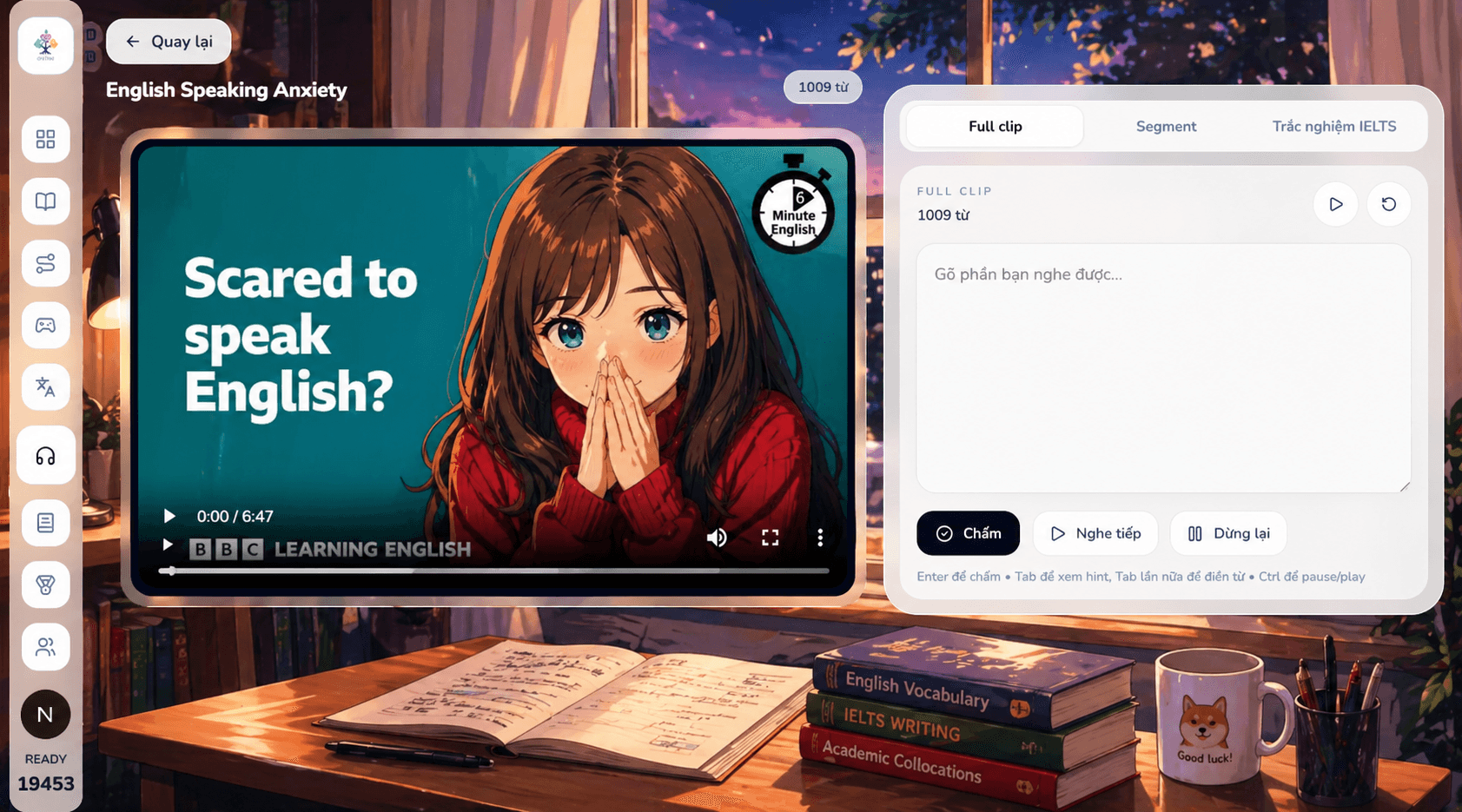
Nghe full clip, luyện theo segment và làm trắc nghiệm IELTS từ transcript.
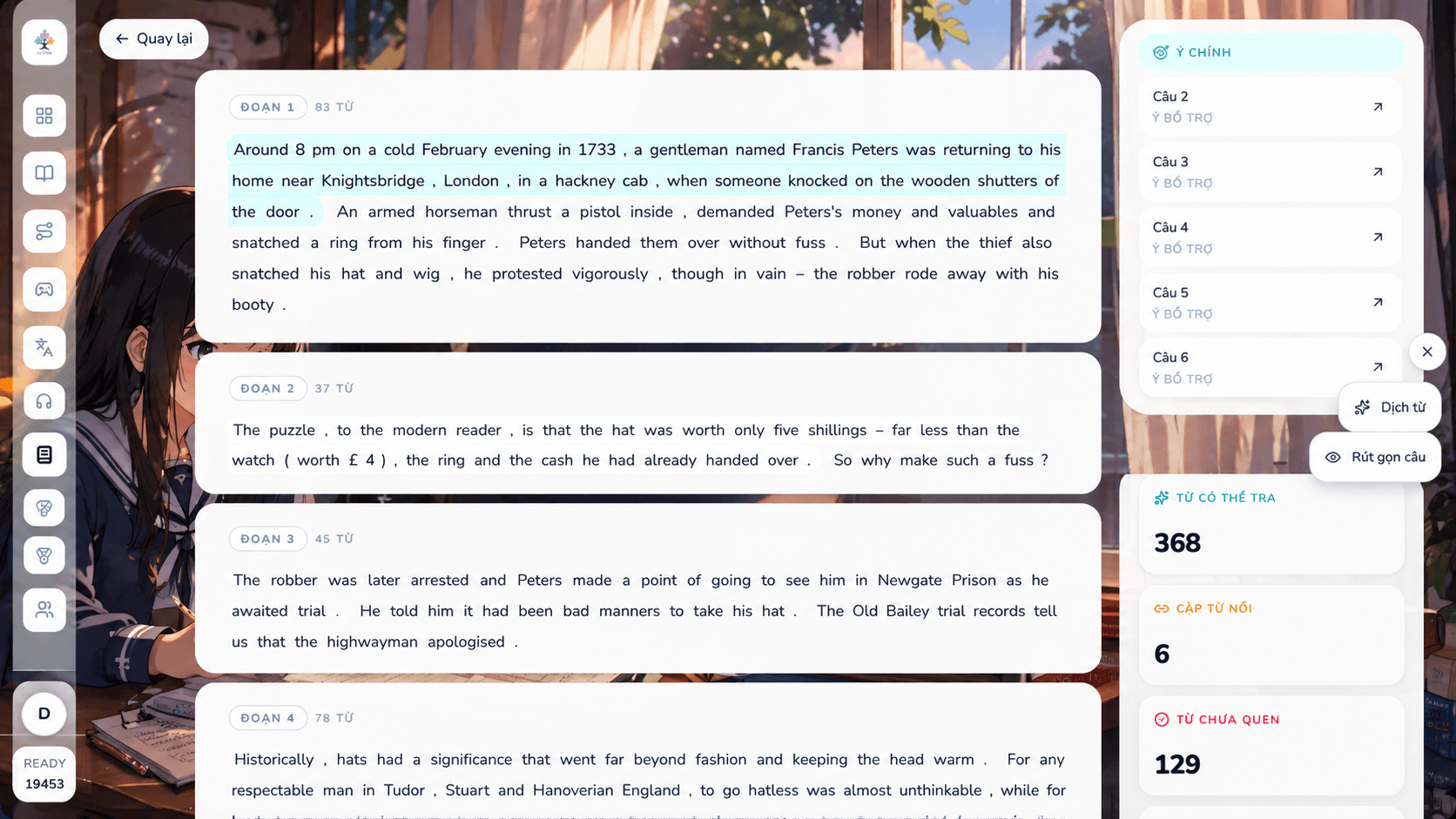
Đọc bài thật, bấm từ để xem nghĩa và rút gọn SVO khi gặp câu dài.
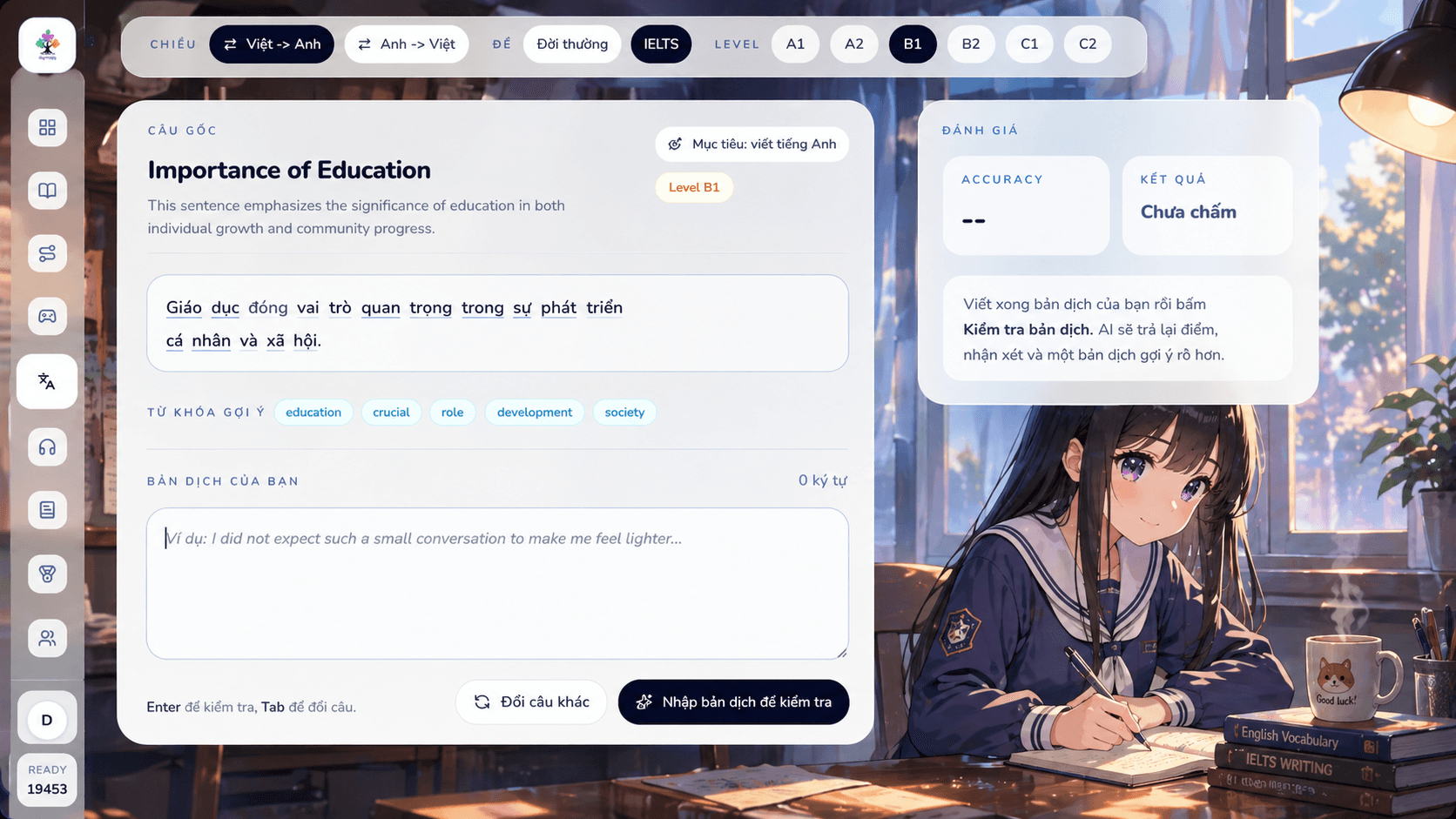
Luyện dịch đoạn ngắn, xem feedback và bản gợi ý để sửa ngay.
Tag mở nhanh
Chọn thẳng nhóm từ muốn học để mở trang từ vựng với bộ lọc có sẵn.
Cách dùng
Mỗi phần dẫn bạn đến đúng lộ trình, bộ từ hoặc mode luyện phù hợp.
Chọn THPT, IELTS, TOEIC, giao tiếp hoặc chuyên ngành trước khi vào học.
Tra nghĩa rồi chuyển sang flashcard, quiz, typing, nghe viết hoặc reading.
SRS, streak và tiến độ cho bạn biết hôm nay nên ôn gì tiếp.
Flashcard SRS
Đẩy từ mới và từ đến hạn ôn vào cùng một vòng học gọn hơn.
Typing và Quiz
Chuyển từ nhận biết sang nhớ chủ động bằng gõ từ và trắc nghiệm.
Listening và Mixed
Nghe viết từ vựng hoặc luyện clip ngắn đã chia segment.
Reading mới
Khi không muốn học từng từ rời rạc nữa, bạn mở bài thật, tra nghĩa ngay trên dòng đang đọc và giữ mạch học.
Đọc thật, học thật
Không còn kiểu đọc nửa bài rồi bỏ vì câu dài quá
Bạn mở một bài, đọc ngay trên trang, bấm vào từ để xem nghĩa Việt, rồi tiếp tục đọc mà không bị lạc mạch.
Với câu dài, app cho bạn nhìn khung SVO trước để thấy ý chính. Sau đó quay lại bản đầy đủ sẽ nhẹ hơn.
Đọc xong có bài tập ngay phía dưới để biến bài đọc thành một lượt học thật.
Chọn bài theo độ khó, nguồn và thời lượng để bắt đầu vừa sức hơn.
Bóc subject, verb, object để nhìn ý chính trước khi đọc sâu.
Bấm vào từ để xem nghĩa Việt mà không phải đổi tab.
Đọc xong có bài tập để biến lượt đọc thành lượt học thật.
Bài theo độ khó và thời lượng giúp giữ nhịp tốt hơn đọc ngẫu nhiên.
Các nhóm lập trình, marketing, tài chính giúp bạn đọc đúng bối cảnh công việc.
Bật rút gọn SVO để thấy trục câu trước, rồi quay lại đọc bản đầy đủ.
Mở bài, bấm từ để xem nghĩa Việt và đọc tiếp ngay câu đang dở. Mạch đọc không bị ngắt bởi từ điển hay tab dịch riêng.
Câu dài thường khó vì nhiều mệnh đề. Nhìn subject, verb, object trước giúp bạn nắm khung câu nhanh hơn.
Nghĩa Việt nằm ngay trong bài nên bạn không cần copy cụm từ qua nơi khác. Các từ vừa gặp vẫn giữ đúng ngữ cảnh.
Flashcard SRS, đọc bài có dịch và rút gọn SVO nối việc học từ đơn lẻ với đọc hiểu thật.
Luyện nghe
Mở clip public hoặc clip riêng, nghe lại từng đoạn và luyện nghe viết ngay trong app.
Clip được chia đoạn ngắn để bạn nghe lại đúng phần vừa miss.
Nhập lại câu hoặc từ sau khi nghe để nối âm thanh với mặt chữ.
Lọc theo level, độ dài và chủ đề như giao tiếp, IELTS, TOEIC hoặc truyện ngắn.
Đánh giá nhanh
Xem nhanh app hợp với ai và nên bắt đầu ở đâu.
IELTS, TOEIC, THPT, idioms và collocations giúp bạn học sát mục tiêu hơn.
Tag lập trình, marketing, tài chính, thiết kế và y tế giúp học đúng bối cảnh.
Gói 6 tháng hợp khi bạn muốn giữ nhịp học dài hơn.
Gợi ý nếu muốn học dài hơi
Giữ nhịp đang là gói cân bằng nhất nếu bạn muốn giữ nhịp học đều thay vì chỉ học dồn vài ngày.
Bảng giá
Bắt đầu free, nâng cấp khi cần.
Miễn phí
0đ
Vào học ngay
Làm quen cách học.
1 tháng
24.000đ
~24.000đ/tháng
Học thử nghiêm túc 30 ngày.
3 tháng
64.800đ
~21.600đ/tháng
Vừa đẹp cho một kỳ ôn.
6 tháng
122.400đ
~20.400đ/tháng
Gọn giá, dễ học đều.
12 tháng
230.400đ
~19.200đ/tháng
Tiết kiệm nhất nếu học dài.
Vĩnh viễn
449.000đ
Mua một lần
Mua một lần để học lâu dài.
Hỏi đáp
Đây là những câu người học thường hỏi trước khi bắt đầu. Trả lời rõ ngay từ đây giúp bạn biết app có hợp với mục tiêu hiện tại hay không.
Cày Từ Vựng là web app học tiếng Anh với từ vựng, luyện nghe, luyện đọc và luyện viết trong cùng một nơi. Bạn chọn deck theo mục tiêu rồi luyện bằng flashcard SRS, quiz, typing, nghe viết, reading và writing.
Có. Người dùng mới có trial 3 ngày để xem toàn bộ cách học. Sau đó bạn vẫn có thể học miễn phí với bộ 3.000 từ, trong đó có 100 idioms và 100 collocations, hoặc mở thêm các gói gia hạn theo ngày khi cần học sâu hơn.
SRS (Spaced Repetition System) là phương pháp ôn tập ngắt quãng giúp bạn gặp lại từ đúng lúc sắp quên. Nhờ vậy bạn học ít vòng hơn nhưng giữ từ lâu hơn.
Oxford 3000/5000 phù hợp để xây vốn từ cốt lõi cho giao tiếp và học tập. Deck theo chủ đề thì hợp khi bạn muốn học sát một mục tiêu cụ thể như IELTS, TOEIC, THPT, idioms, collocations hoặc chuyên ngành.
App có flashcard SRS, trắc nghiệm, nối từ với nghĩa, gõ từ, nghe viết, mixed mode, reading theo bài và writing ngắn có feedback.
Có. Bạn có thể luyện nghe viết từ vựng hoặc mở clip ngắn đã chia segment để nghe lại từng đoạn, xem transcript và luyện theo nhịp dễ kiểm soát hơn.
Có. Khu reading cho phép chọn bài theo chủ đề, độ khó và thời lượng, đọc ngay trên trang, bấm từ để xem nghĩa Việt và làm bài tập sau khi đọc.
Đó là cách làm gọn câu dài để bạn nhìn subject, verb, object trước. Khi thấy trục câu, bạn đỡ ngợp hơn lúc đọc câu học thuật hoặc câu báo chí dài.
Bài viết nổi bật
Nếu bạn chưa chắc nên bắt đầu từ deck nào, học bằng mode nào hay có nên thêm collocation ngay hay không, ba bài dưới đây là điểm vào gọn nhất.
Study Workflow
Sai lầm phổ biến nhất là học quá nhiều trong vài ngày đầu rồi bỏ giữa chừng. Một nhịp học bền hơn thường bắt đầu bằng ít từ, review đều và tăng dần độ khó.
CEFR Roadmap
Học từ vựng theo CEFR giúp bạn có nhịp tăng độ khó rõ ràng. Cốt lõi là không nhảy level quá sớm và luôn giữ một phần review của level trước.
Collocations
Biết nghĩa của từng từ chưa chắc giúp bạn nói tự nhiên. Phần tạo ra cảm giác “đúng tiếng Anh” rất nhiều khi nằm ở collocation, tức những từ hay đi cùng nhau.
Public Word Preview
Đây là phần preview công khai để bạn xem nhanh nghĩa, phát âm và một ví dụ ngắn trước khi mở toàn bộ chế độ luyện trong app.
Ví dụ công khai
He is a Protestant.
Deck liên quan